
A whole turkey can look beautifully browned on the outside while the thigh still needs time; judging it by color alone is an easy way to miss that. For this smoked turkey on a pellet grill, I rely on two separate temperature checks and let the bird rest before carving. That gives me a clear finish line instead of asking the breast and thigh to cook at exactly the same pace.
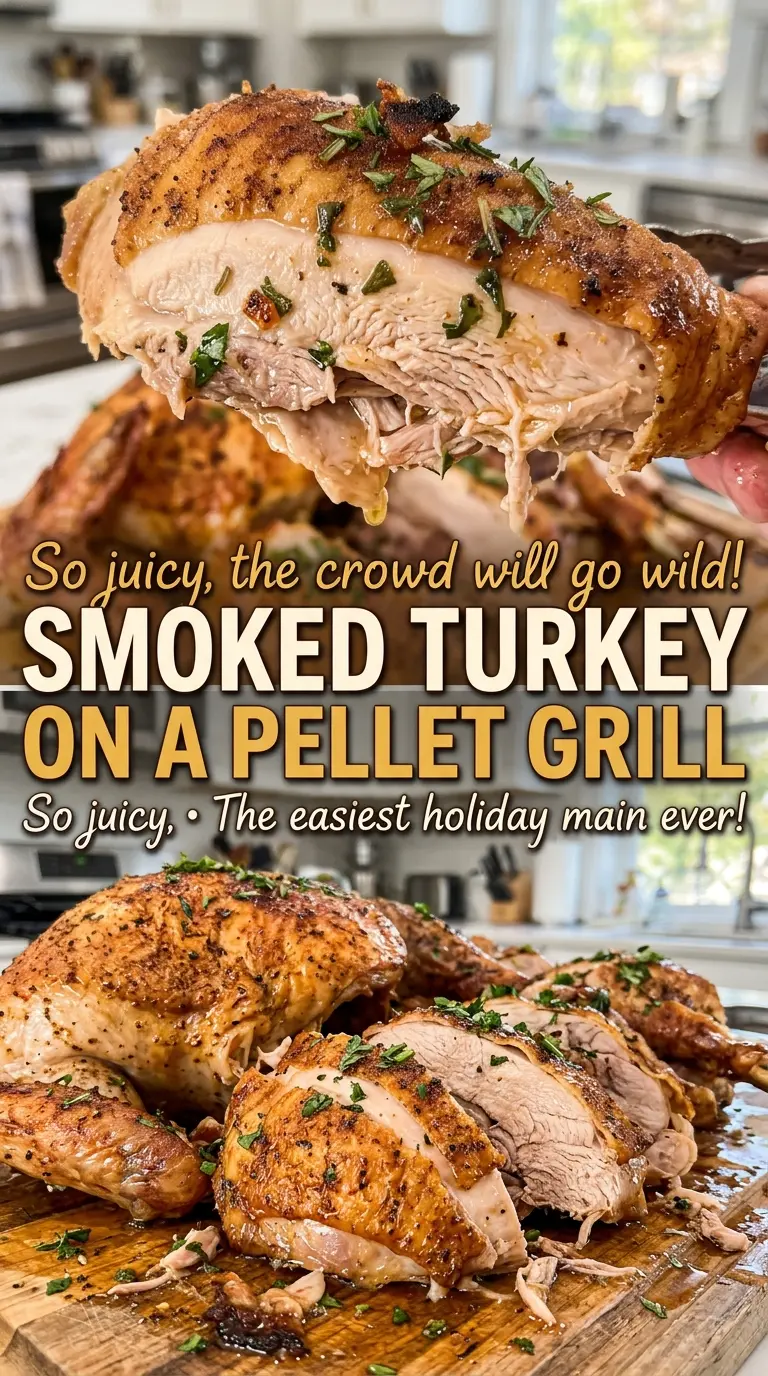
The prep starts well before the grill does. Salt goes under the breast skin as well as over the outside, then the uncovered turkey rests in the refrigerator so the seasoning has time to work. Softened butter spreads beneath the skin and across the exterior, while lemon, onion, garlic, thyme, and rosemary bring a gentle aroma from the cavity. The result is a whole turkey with seasoned meat, a smoky edge, and fragrant slices ready for the table.
Kitchen Note
Use softened butter, not melted butter. It should yield easily when pressed but still hold its shape; that makes it much easier to spread beneath the breast skin without tearing it.
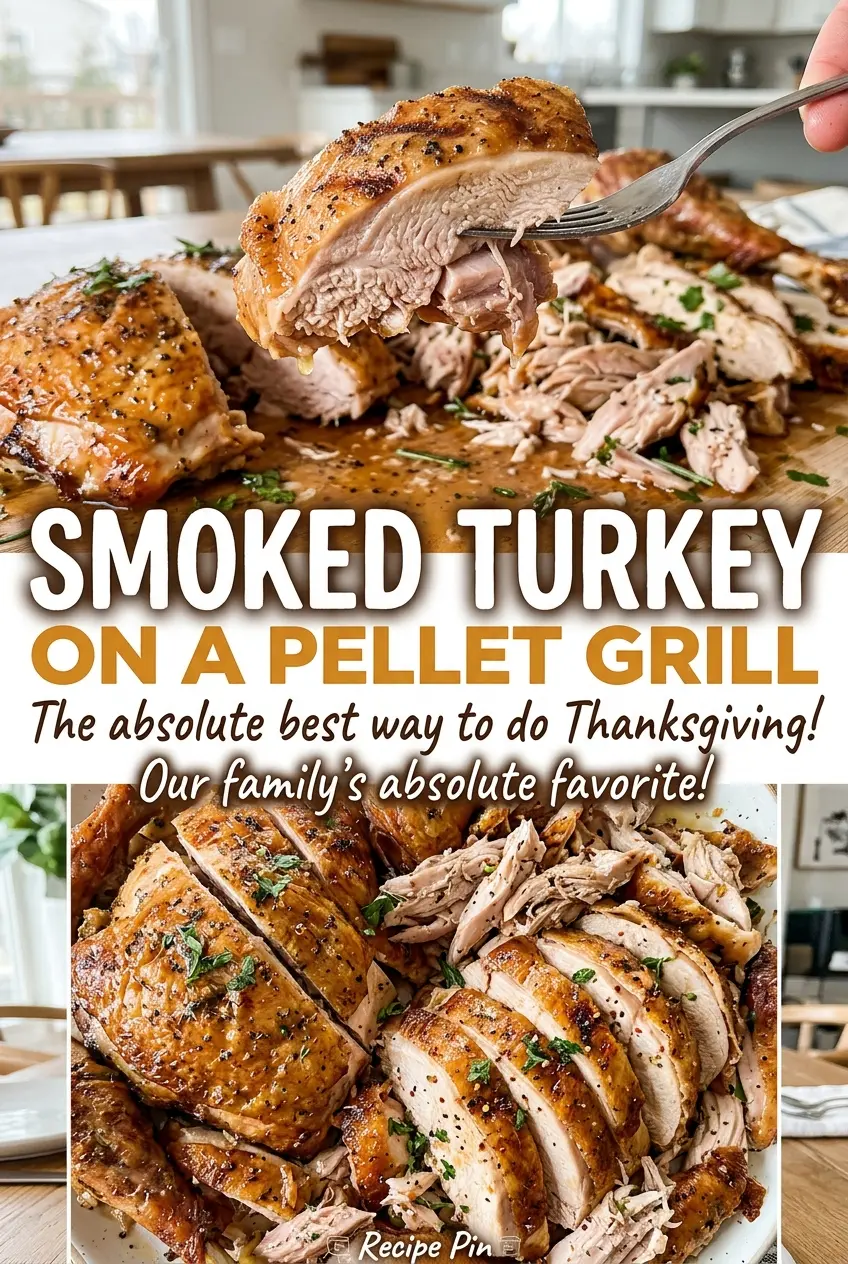
Save this smoked turkey on a pellet grill for a whole bird with seasoned meat, butter beneath the skin, and a clear two-temperature finish.
Why the Breast and Thigh Need Separate Doneness Checks
A whole turkey isn’t one uniform piece of meat. The breast is lean and can dry out if it stays on the grill while the legs catch up, while the thighs have more connective tissue and benefit from cooking to a higher temperature. That difference is why I check both areas instead of relying on the clock or the color of the skin.
Use an instant-read thermometer in the thickest part of the breast and the innermost part of the thigh, taking care not to touch bone. If the breast reaches its target first, the thigh still needs to reach its own target before the bird comes off the grill. The timing range gives you an estimate, but the thermometer tells you what is happening inside this particular turkey. If the skin is getting darker faster than the meat is cooking, a loose foil tent slows the browning without changing the grill temperature.
The Salt, Butter, and Aromatics That Shape This Smoked Turkey
- Whole turkey — A fully thawed bird in the specified size range is important for predictable timing. Choose a plain, unseasoned turkey if you can; an already salted or injected bird can turn too salty under the full seasoning treatment.
- Morton kosher salt — The crystal size affects how much salt fits in a spoon, so I stick with the specified kosher salt rather than swapping in fine table salt measure for measure. A premium label isn’t necessary; consistent crystal size is what matters here.
- Ground black pepper — It seasons the outside along with the salt. Use the ground pepper listed rather than assuming whole peppercorns or a pepper blend will behave the same way.
- Unsalted butter — Unsalted butter adds richness without bringing in more salt, and the softened texture makes it spreadable beneath the breast skin. For a dairy-free version, see the variation below; there isn’t a direct dairy-free ingredient in this ingredient list.
- Onion, lemon, garlic, thyme, and rosemary — These cavity aromatics lend their fragrance as the turkey cooks. Fresh thyme and rosemary are the ingredients specified; dried herbs don’t tuck into the cavity in the same way, so I don’t use a one-for-one swap.
From Dry-Brined Bird to Pellet-Grill Finish
Salt the Turkey and Let the Surface Dry
Pat the fully thawed turkey dry with paper towels; don’t rinse it. Loosen the skin over the breasts and rub the salt over the outside, inside the cavity, and beneath the breast skin. Set it breast-side up on a wire rack over a rimmed baking sheet and refrigerate it uncovered for 12 to 24 hours. The uncovered rest gives the surface time to dry while the salt seasons the bird.
Season, Butter, and Fill the Cavity
Preheat the pellet grill to 325°F with the lid closed. Rub the ground black pepper over the turkey, then spread the softened butter beneath the breast skin and over the outside. Put the quartered onion and lemon, smashed garlic, thyme, and rosemary in the cavity. Tie the legs together with kitchen twine before moving the bird to the grill.
Cook Over the Grates and Watch Both Readings
Set the turkey breast-side up directly on the grill grates and cook with the lid closed for 3 to 4 1/2 hours. Check the thickest part of the breast for 165°F and the innermost part of the thigh for 175°F. The bird is ready when both spots reach their target, even if that happens near the start or end of the time range. If the skin browns too quickly, tent the turkey loosely with foil.
Rest Before Carving
Transfer the turkey to a cutting board and leave it to rest for 30 minutes before carving. That pause gives the juices time to settle instead of running across the board as soon as you cut into the breast. Keep the rest period intact even when the turkey looks ready to serve; carving too early makes it harder to keep the slices moist.
Three Useful Changes Without Reworking the Grill Method
A dairy-free turkey without a butter replacement
Leave out the butter beneath the skin and on the outside. The turkey will have less buttery richness and the skin may brown differently, but the salt, pepper, cavity aromatics, grill temperature, and doneness checks stay the same. I don’t add another ingredient as a stand-in.
A brighter cavity without lemon
Omit the lemon and keep the onion, garlic, thyme, and rosemary in the cavity. You’ll lose the citrus fragrance, leaving the savory onion and herbs more noticeable without changing the turkey’s seasoning or grill method.
A milder cavity without garlic
Leave out the smashed garlic and use the onion, lemon, thyme, and rosemary as written. The aroma will be gentler and less savory, while the pepper and salt still season the outside and beneath the breast skin.
Storage and Reheating
- Refrigerator: Refrigerate leftovers within 2 hours and use them within 3 to 4 days. The breast meat firms up as it chills.
- Freezer: Carve the leftovers and seal them in airtight freezer-safe packaging. They keep well for 2 to 6 months, though the texture is best sooner.
- Reheating: Warm covered portions gently in the oven or microwave, stopping as soon as they’re hot throughout. Reheating uncovered or for too long dries out the lean breast meat.
Questions That Come Up Before Smoking a Whole Turkey
Smoked Turkey on a Pellet Grill
Ingredients
Equipment
Method
- Pat the turkey dry with paper towels; do not rinse it.
- Loosen the skin over the breasts and rub the salt evenly over the turkey, including inside the cavity and beneath the breast skin.
- Set it breast-side up on a wire rack over a rimmed baking sheet and refrigerate uncovered for 12 to 24 hours.
- Preheat the pellet grill to 325°F with the lid closed.
- Rub the pepper over the turkey.
- Spread the butter beneath the breast skin and over the outside.
- Put the onion, lemon, garlic, thyme, and rosemary in the cavity, then tie the legs together with kitchen twine.
- Set the turkey breast-side up directly on the grill grates and cook with the lid closed for 3 to 4 1/2 hours, until the thickest part of the breast reaches 165°F and the innermost part of the thigh reaches 175°F; tent loosely with foil if the skin browns too quickly.
- Transfer the turkey to a cutting board.
- Rest for 30 minutes before carving.